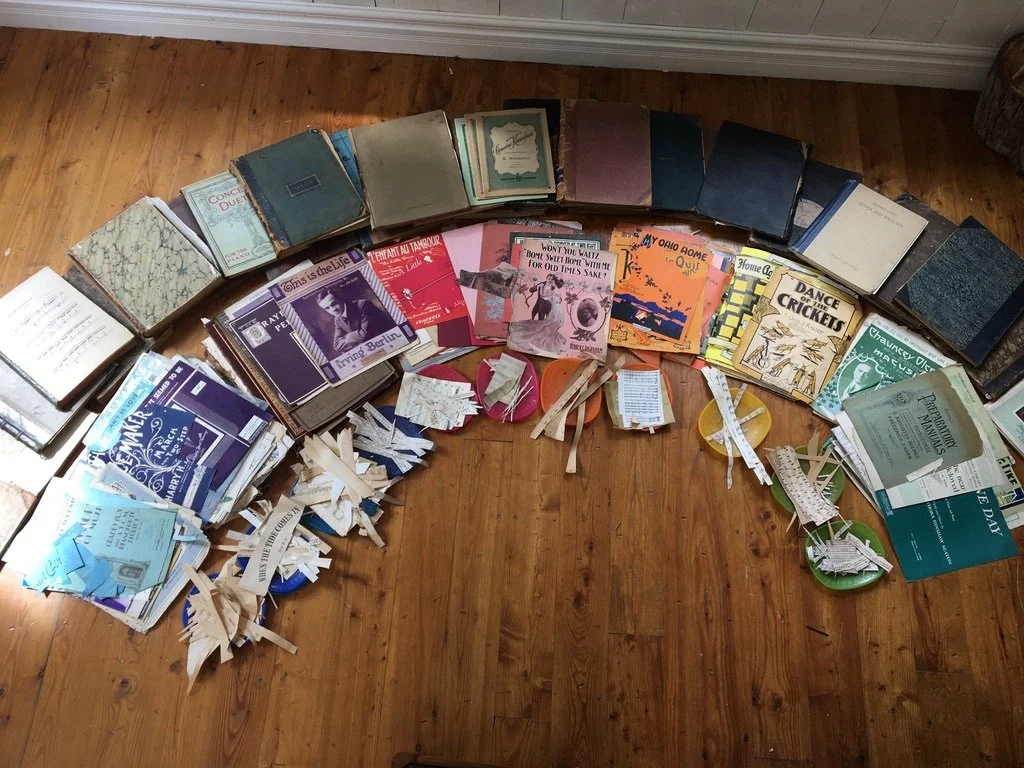
My papier-mâché/collage/mosaic works using antique sheet music seeks to celebrate and repurpose music from my great paper era collection of music which spans 300 years (1723-1954). My creative endeavours have focused on creating and celebrating language with a particular emphasis on universal languages and those of healing and joy in particular. As a multi lingual and multi cultural person music was (and still is) a most tangible link to culture for me. I grew up moving every two years and although we were posted far and wide, my parents, an Irish mother from the north of Ireland and a French Canadian military man with Métis (Algonquin) heritage, made sure we were given strong links to our mixed heritage. I also use it because the wealth of printed music from the last several centuries has become obsolete for the most part. It has been collected and shared with great care from one generation to another, some of the greatest paper ever made was made for music to stand on pianos and be passed from hand to hand to hand. I have collected it since adolescence and have always yearned to use it in my work as an artist and artisan.
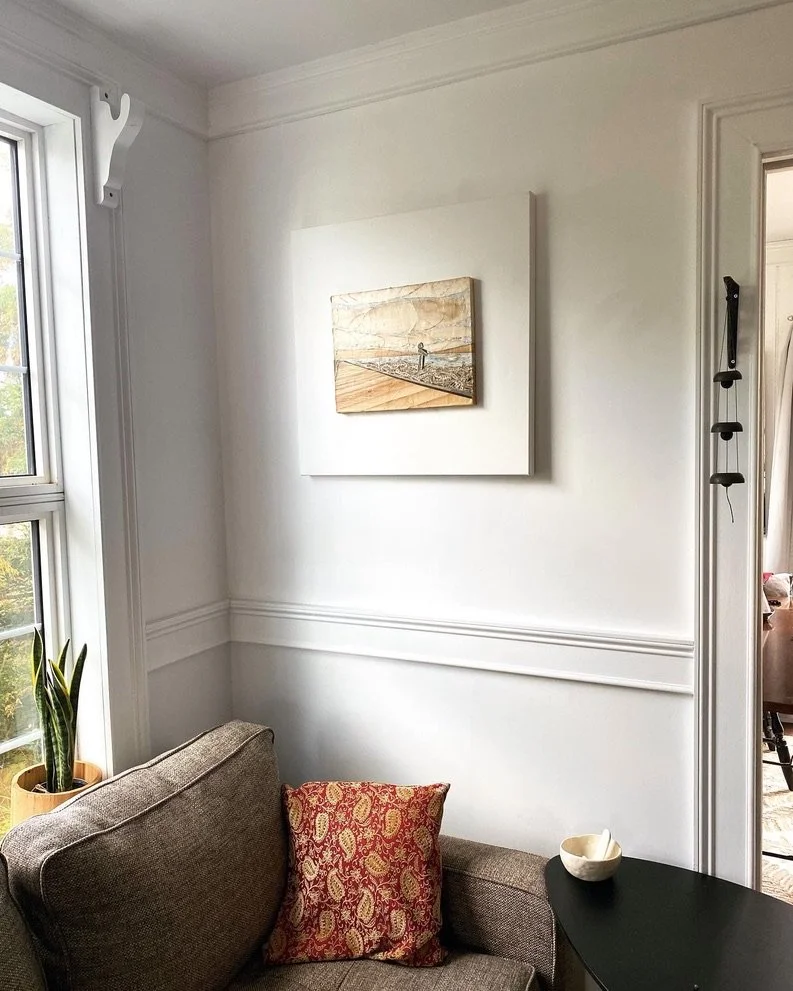
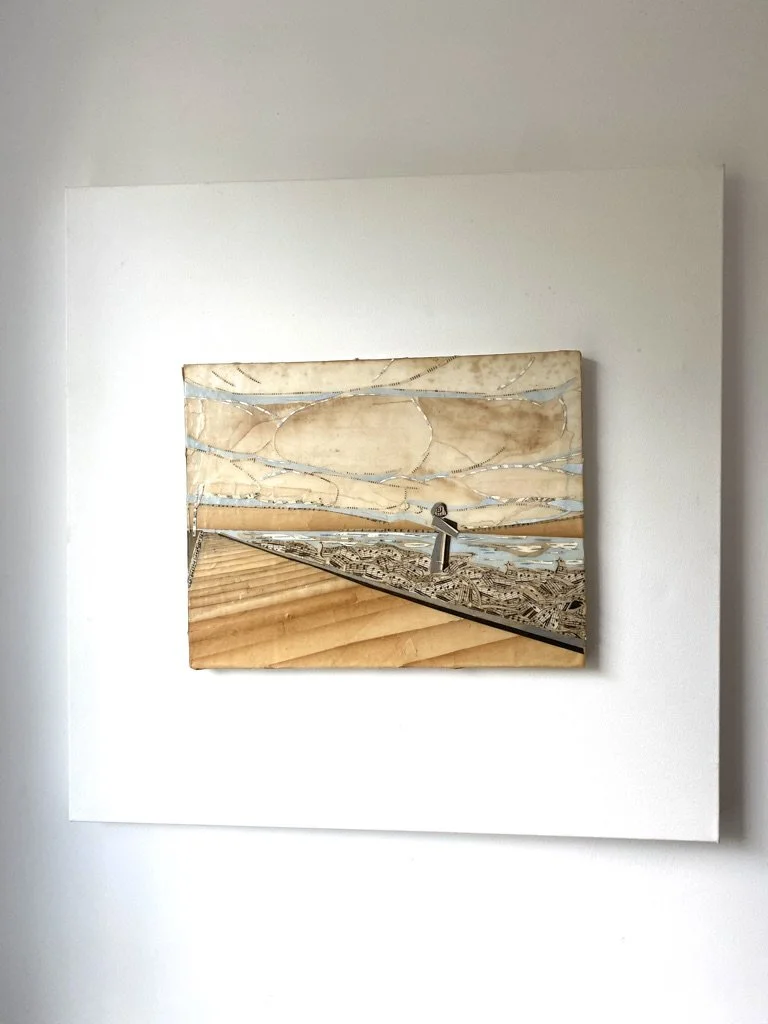
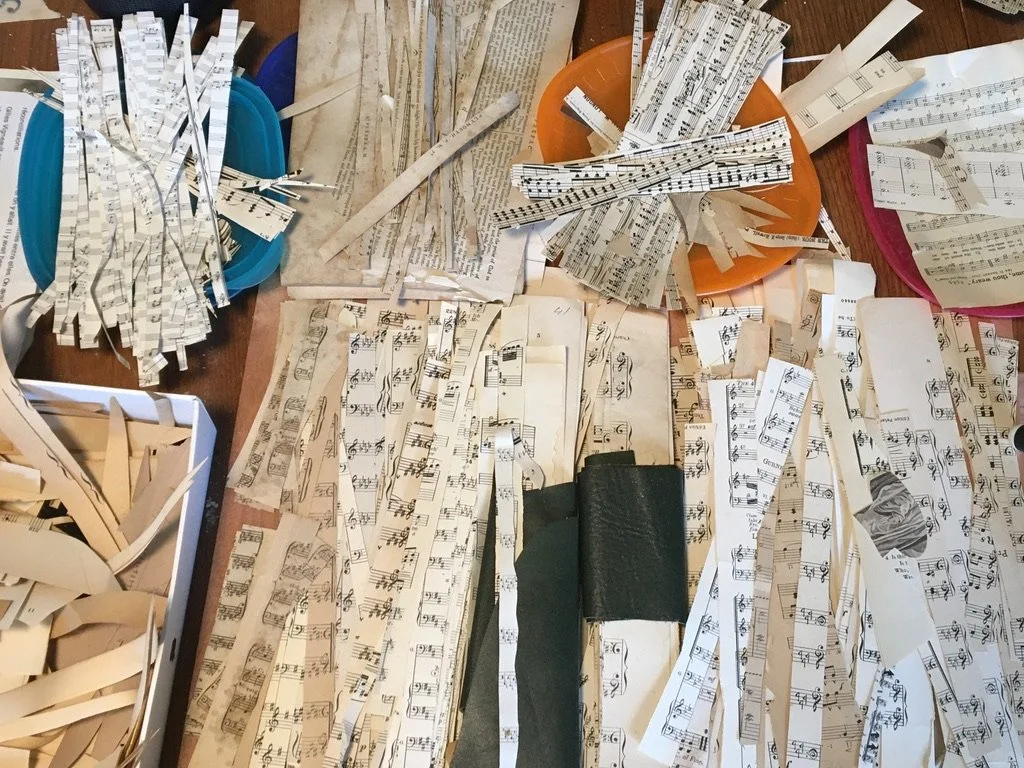
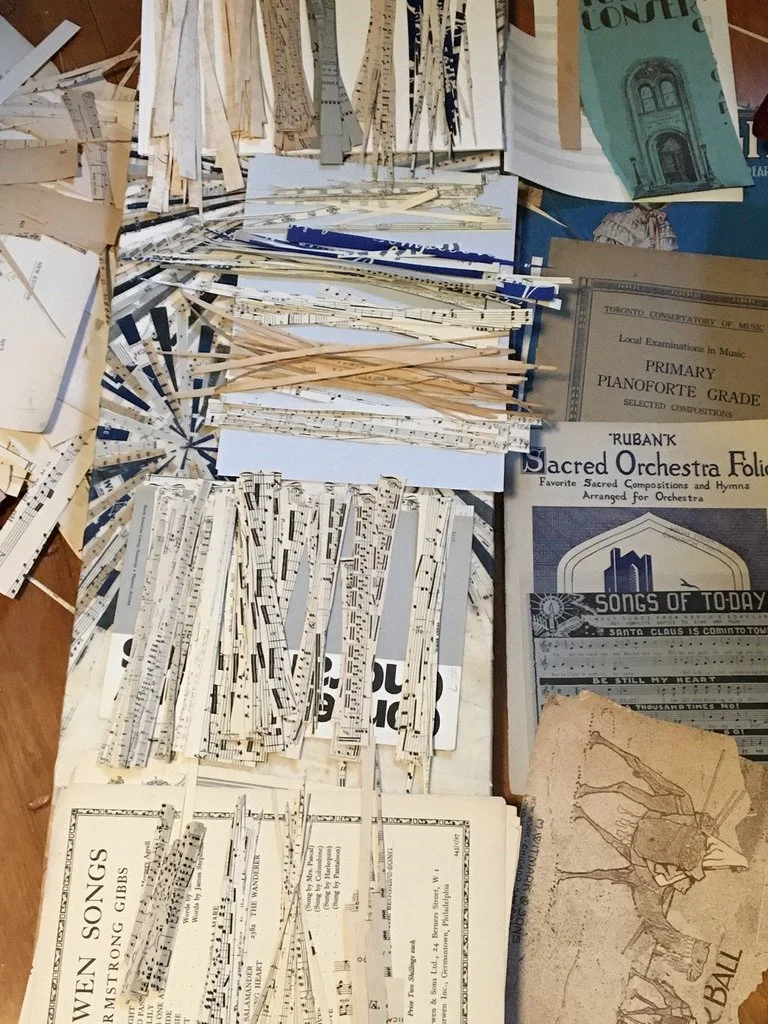
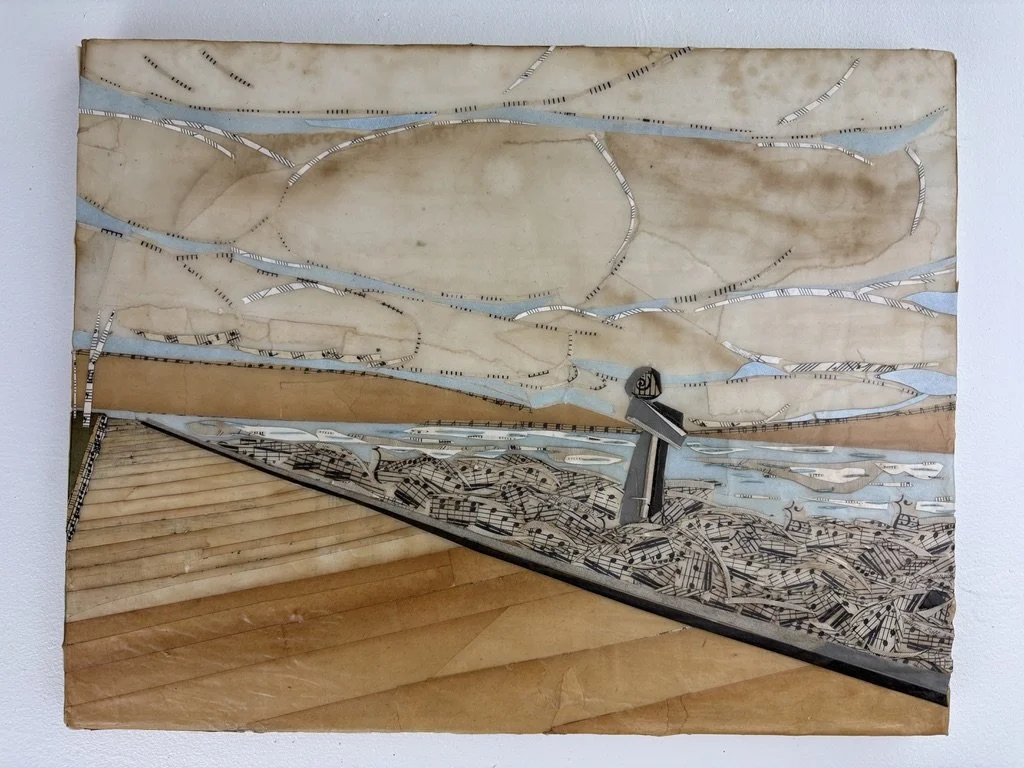
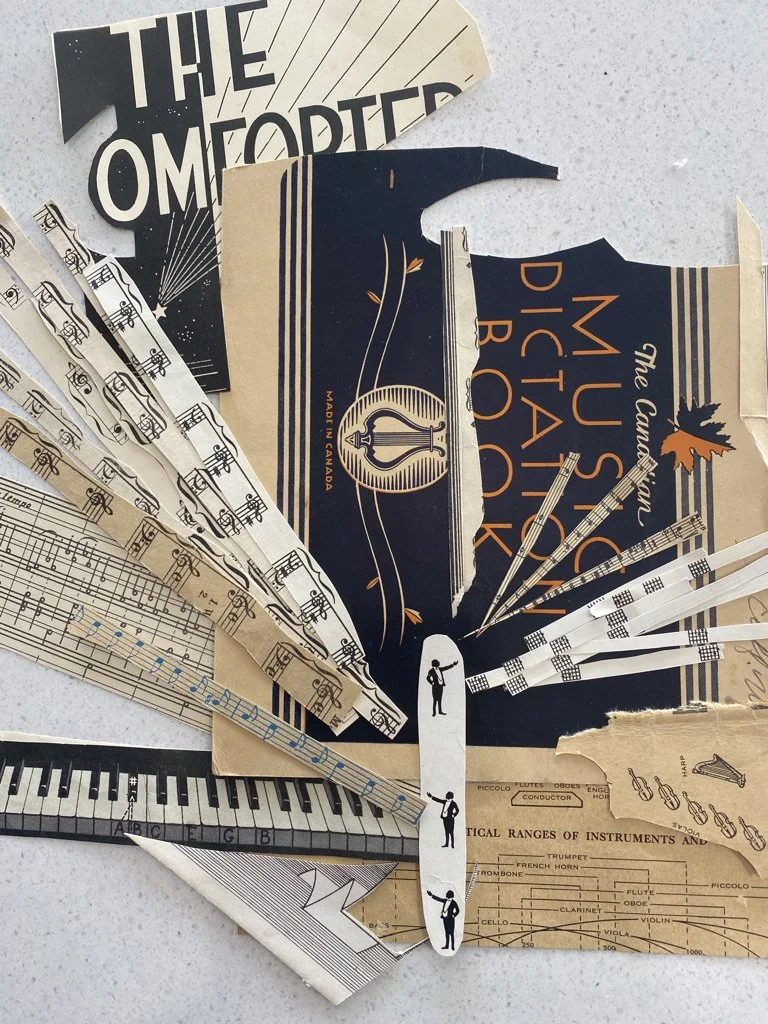
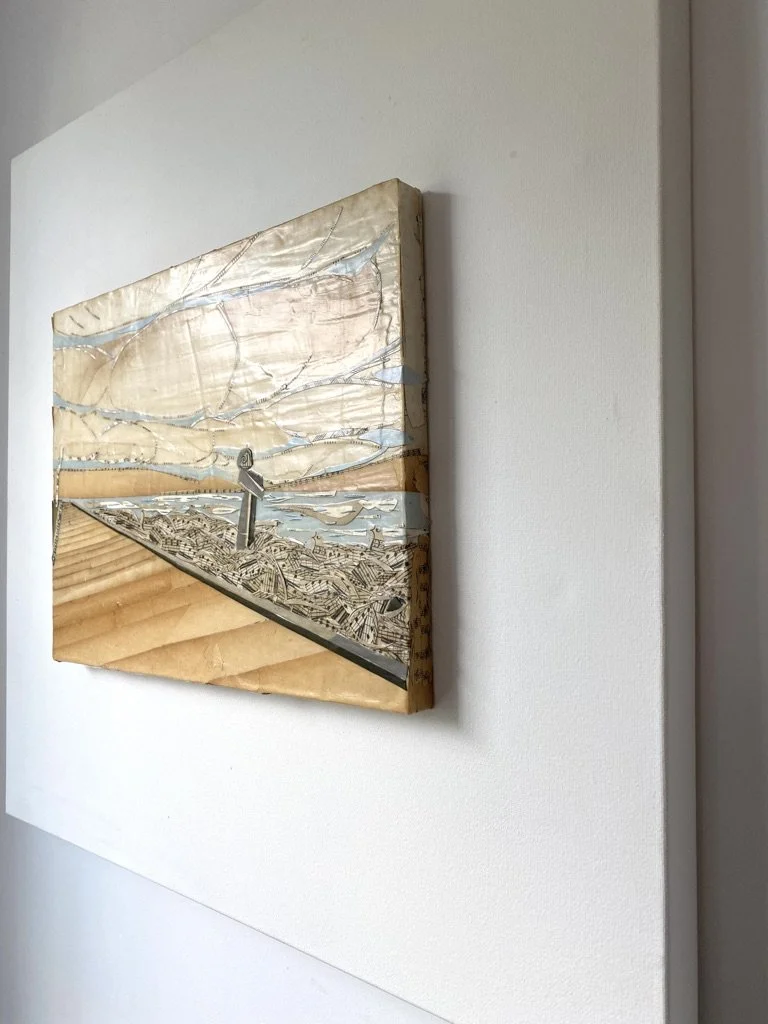
When I begin to cut into my musical archive, it is paramount for me to honour every aspect of each piece of music I used for these works. As such, the inventory of colour resulting from different paper composition(cotton, linen even mummy paper from the 1840’s) margins, print size, decorative whimsy and graphic patterns have become the components of my palette. The darker honey coloured paper(due to bleach in paper making process) is from the 1930’s and begins the boardwalk whereas the whiter paper is from the 19th century. The pale white paper with caramel edge in the swirling sky is from 1802 and superimposed upon it, music margins from 1854 and small quiet staffing from a folio from 1896 (one of my favourites). The boardwalk at its furthest away is the paper with a gilt gold line that dates from 1723. The stones are from the late 19th century and are contoured by cutting from a Shakespeare set engraving from 1802.
I live and regale in the beauty of the Annapolis Basin. Before European settlement, the Annapolis Royal area was known to the Mi'kmaq as Te'wapskik, meaning "flowing waters" or "flowing out between high rocks". It is located in the district of Kespukwitk ("land's end") and is also referenced in relation to Nme'juaqnek ("place of bountiful fish") for the nearby basin. The beautiful walk along the boardwalk of beautiful Annapolis Royal is made merry when we have many visitors in summer and as they arrive, the inuksuit along the boardwalk multiply.
My papier-mâché/collage/mosaic works using antique sheet music seeks to celebrate and repurpose music from my great paper era collection of music which spans 300 years (1723-1954). My creative endeavours have focused on creating and celebrating language with a particular emphasis on universal languages and those of healing and joy in particular. As a multi lingual and multi cultural person music was (and still is) a most tangible link to culture for me. I grew up moving every two years and although we were posted far and wide, my parents, an Irish mother from the north of Ireland and a French Canadian military man with Métis (Algonquin) heritage, made sure we were given strong links to our mixed heritage. I also use it because the wealth of printed music from the last several centuries has become obsolete for the most part. It has been collected and shared with great care from one generation to another, some of the greatest paper ever made was made for music to stand on pianos and be passed from hand to hand to hand. I have collected it since adolescence and have always yearned to use it in my work as an artist and artisan.
When I begin to cut into my musical archive, it is paramount for me to honour every aspect of each piece of music I used for these works. As such, the inventory of colour resulting from different paper composition(cotton, linen even mummy paper from the 1840’s) margins, print size, decorative whimsy and graphic patterns have become the components of my palette. The darker honey coloured paper(due to bleach in paper making process) is from the 1930’s and begins the boardwalk whereas the whiter paper is from the 19th century. The pale white paper with caramel edge in the swirling sky is from 1802 and superimposed upon it, music margins from 1854 and small quiet staffing from a folio from 1896 (one of my favourites). The boardwalk at its furthest away is the paper with a gilt gold line that dates from 1723. The stones are from the late 19th century and are contoured by cutting from a Shakespeare set engraving from 1802.
I live and regale in the beauty of the Annapolis Basin. Before European settlement, the Annapolis Royal area was known to the Mi'kmaq as Te'wapskik, meaning "flowing waters" or "flowing out between high rocks". It is located in the district of Kespukwitk ("land's end") and is also referenced in relation to Nme'juaqnek ("place of bountiful fish") for the nearby basin. The beautiful walk along the boardwalk of beautiful Annapolis Royal is made merry when we have many visitors in summer and as they arrive, the inuksuit along the boardwalk multiply.